
Simplifying an Education Nonprofit Website with OOUX
THE CHALLENGE
Cutting Through Internal Jargon
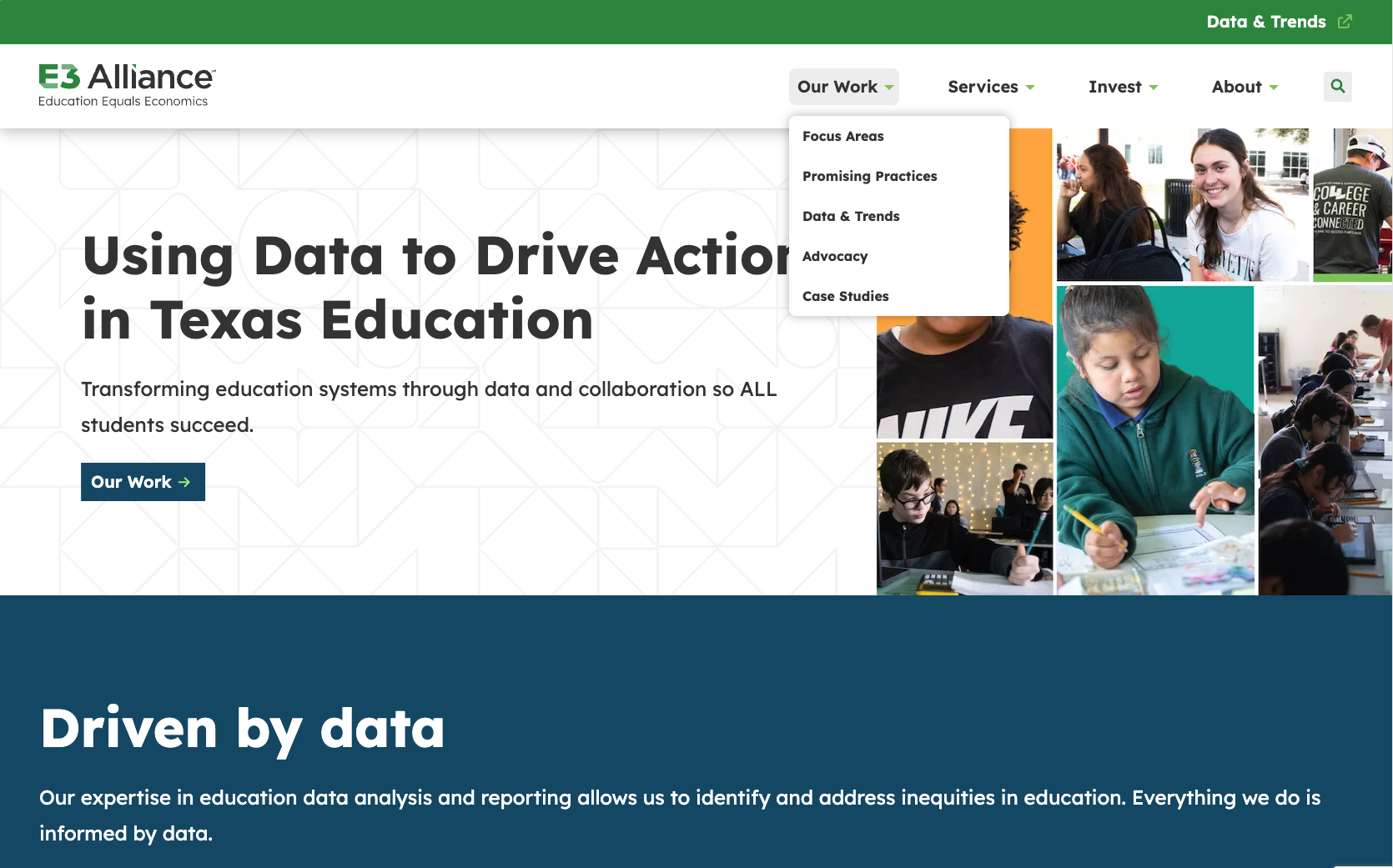
A data-driven education nonprofit that partners with schools, higher-ed institutions, businesses, nonprofits, and policymakers wanted help re-designing their public facing website. Their existing website’s poor experience was a result of conflicting department goals, misuse of content types, along with really specific internal terms that weren't recognizable to their audiences, the parents, teachers, and policymakers they partner with.
Terms like "Bright Spots","The Why","Solutions","Initiatives", and "Promising Practices" were being used interchangeably or inconsistently.
A parent visiting their site would have to figure out:" Is a Solution the same as an Initiative? How is that different from a Promising Practice? What even is a Bright Spot?
If we had designed their website structure without clarifying this first, we would have built confusion directly into the experience. Stakeholders would push back too late, requiring painful revisions, or worse another re-design in a few years.
Getting Everyone on the Same Page
I facilitated an ORCA Sprint with the full project team (program directors, communications leads, development teams, content creators, designers).
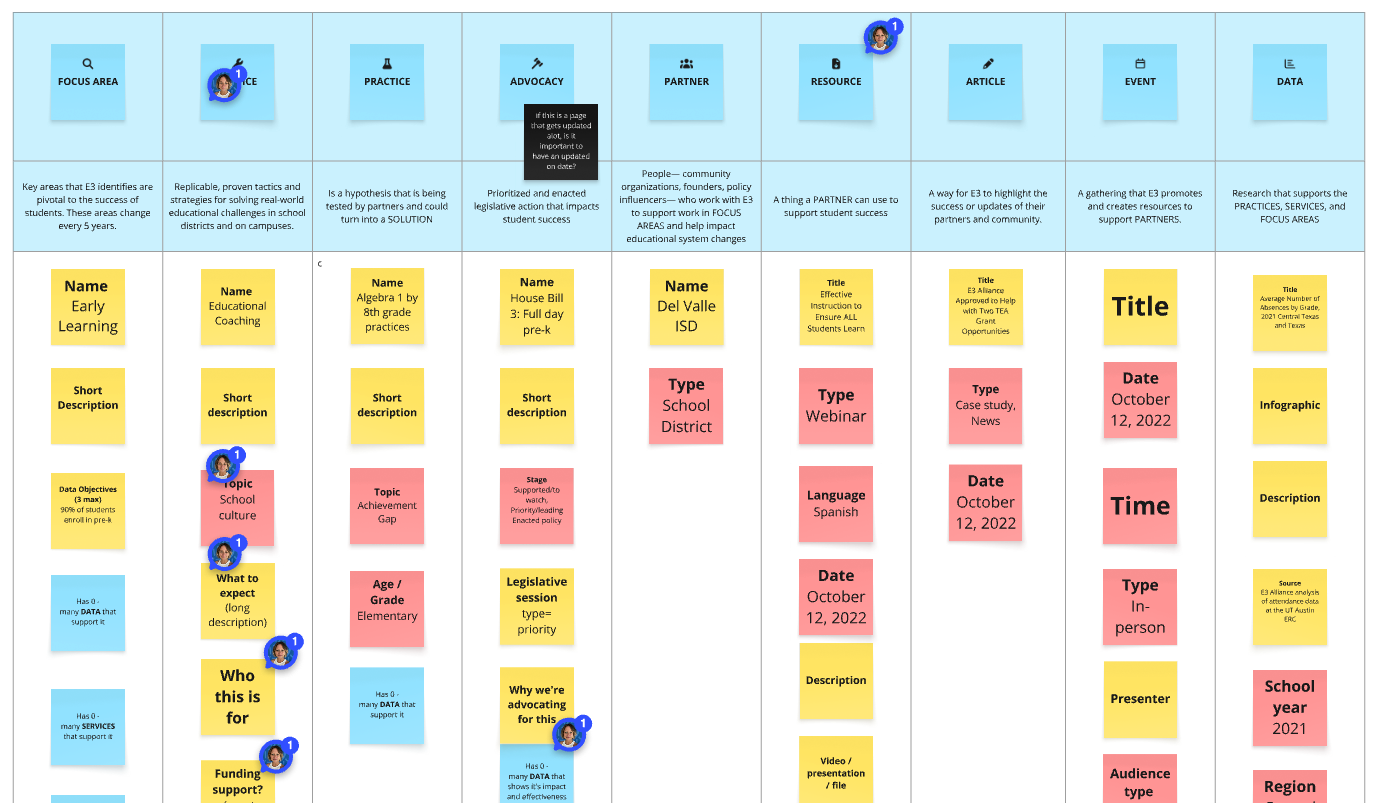
During these interactive workshops, we spent time talking about their systems objects and current content types. Things like Focus Areas, Articles, Solutions, Initiatives, Resources, Events.
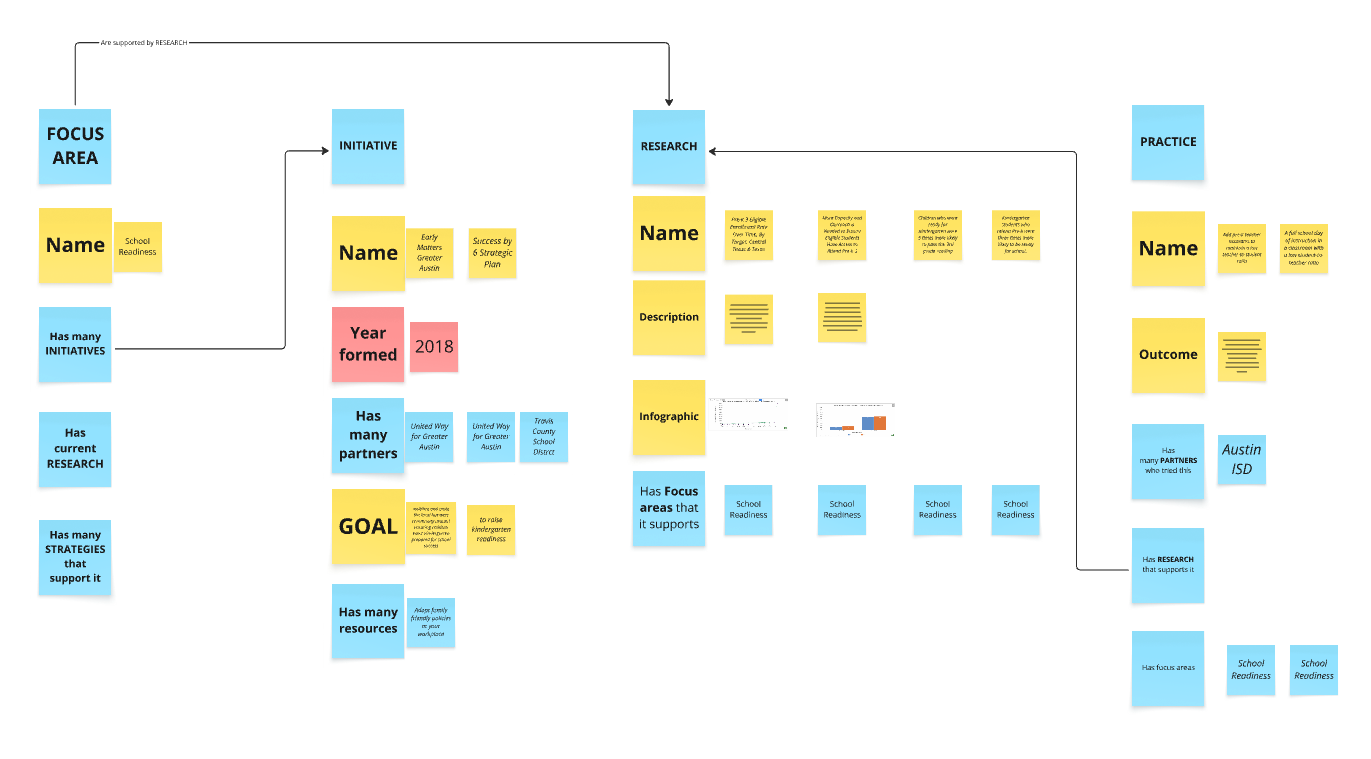
Through these conversations, we saw how they were using multiple terms (Solution, Initiative, Promising Practice) to describe the exact same thing. By talking through the differences and similarities, we agreed on simplifying the terms used, bringing clarity not only to users visiting their website, but to their internal organization.
We had similar conversations about "Bright Spots" versus "Success Stories." Bright Spots was such an internal term, not part of a typical parent's or teacher's everyday language. Even though they were trying to be unique, it inhibited them from communicating what an article was about.
With the objects spread out on blue sticky notes in front of stakeholders during the sprint, we were able to explain content and information architecture best practices and got approval before we designed screens or defined content types.
This meant no surprises later. No "Why did you change our terminology?" conversations after we'd already designed everything.

Building a System That Actually Communicates
We simplified their website structure while still supporting their goals, which drastically cut development time. We created a system they could grow and expand, but one that supported their most critical needs first.
When partners visited their website and saw "Promising Practice," they could focus on understanding that concept instead of doing mental gymnastics trying to understand 5 different terms.
What this meant for the organization:
Reduced mental load on visitors by being clear about system structure
Better experience finding information
Everyone internally understood their own organization better
Improved communication about what they do, not just on the website, but in partnerships and advocacy work
Why do I use OOUX ?
Learn why I’ve integrated OOUX and the ORCA process into my work supporting clients and teams.