

WEBSITE
When a Mission-Driven Organization Couldn't Clearly Explain What It Did
An education nonprofit with conflicting internal language. Object-oriented workshops resolved it before it was designed into the site, preventing a full redesign down the line.

THE CHALLENGE
Cutting Through Internal Jargon
A data-driven education nonprofit that partners with schools, higher-ed institutions, businesses, nonprofits, and policymakers, needed help redesigning their public-facing website. Their existing site had three compounding problems:
Conflicting department goals
Inconsistent content structure
Internal jargon their audiences couldn't make sense of
Terms like Bright Spots,The Why, and Promising Practices, were being used inconsistently across the site. A parent visiting might find themselves asking: Is a Solution the same as an Initiative? How is that different from a Promising Practice? What even is a Bright Spot?
If we had designed their website structure without resolving this first, we would have built that confusion directly into the experience, setting up stakeholder pushback, painful revisions, or worse, a full redesign a few years down the line.
Getting Everyone on the Same Page
To untangle it, I facilitated a multi-day object-oriented discovery sprint—a set of structured workshops based on Object-Oriented UX, a method for designing systems around the real-world objects users interact with. The full project team joined: program directors, communications leads, development teams, content creators, and designers.
Together, we mapped out their system's core objects and talked through how each one was actually being used.
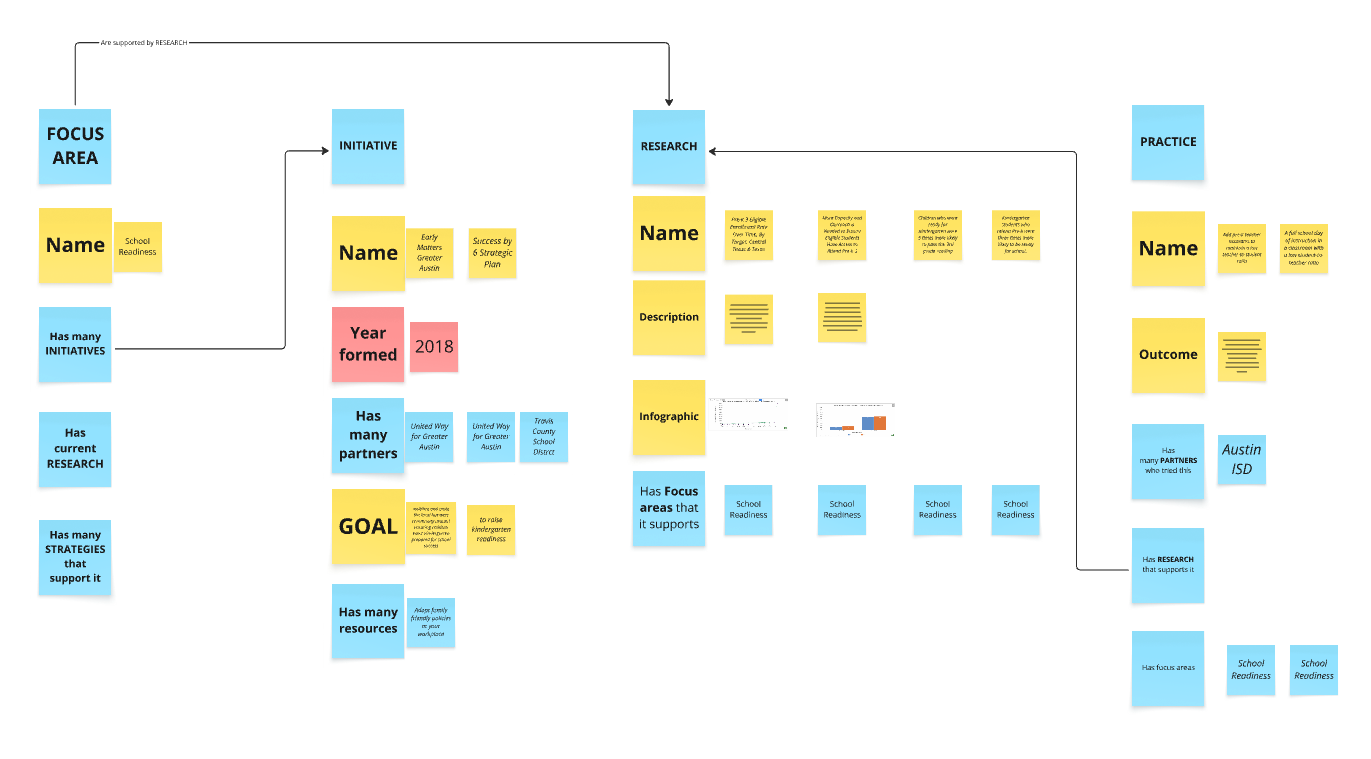
It quickly became clear they were using three different terms—Solution, Initiative, and Practice—to describe the same concept. By working through the differences and similarities as a group, we agreed to consolidate them into a single, consistent term. That one decision brought clarity not just to site visitors, but to the organization internally.
We had a similar conversation about Bright Spots versus Success Stories. Bright Spots was a beloved internal phrase, but it wasn't part of a typical parent's or teacher's everyday language. As unique as it felt, it made it harder for visitors to understand what they were actually reading. Success Stories said it plainly.
With their content objects laid out in front of the full team, we were able to walk through content and structural best practices, getting quick alignment before a single screen was designed. No surprises later or "Why did you change our terminology?" conversations after the fact.

Building a System That Actually Communicates
With a clear, agreed-upon structure in place, we re-designed the site in a way that supported their goals without unnecessary complexity. The simplified information architecture reduced back-and-forth during development and gave the team a system they could grow over time, starting with what mattered most.
When partners visited the site, they could focus on understanding the content, not on decoding what each term meant.
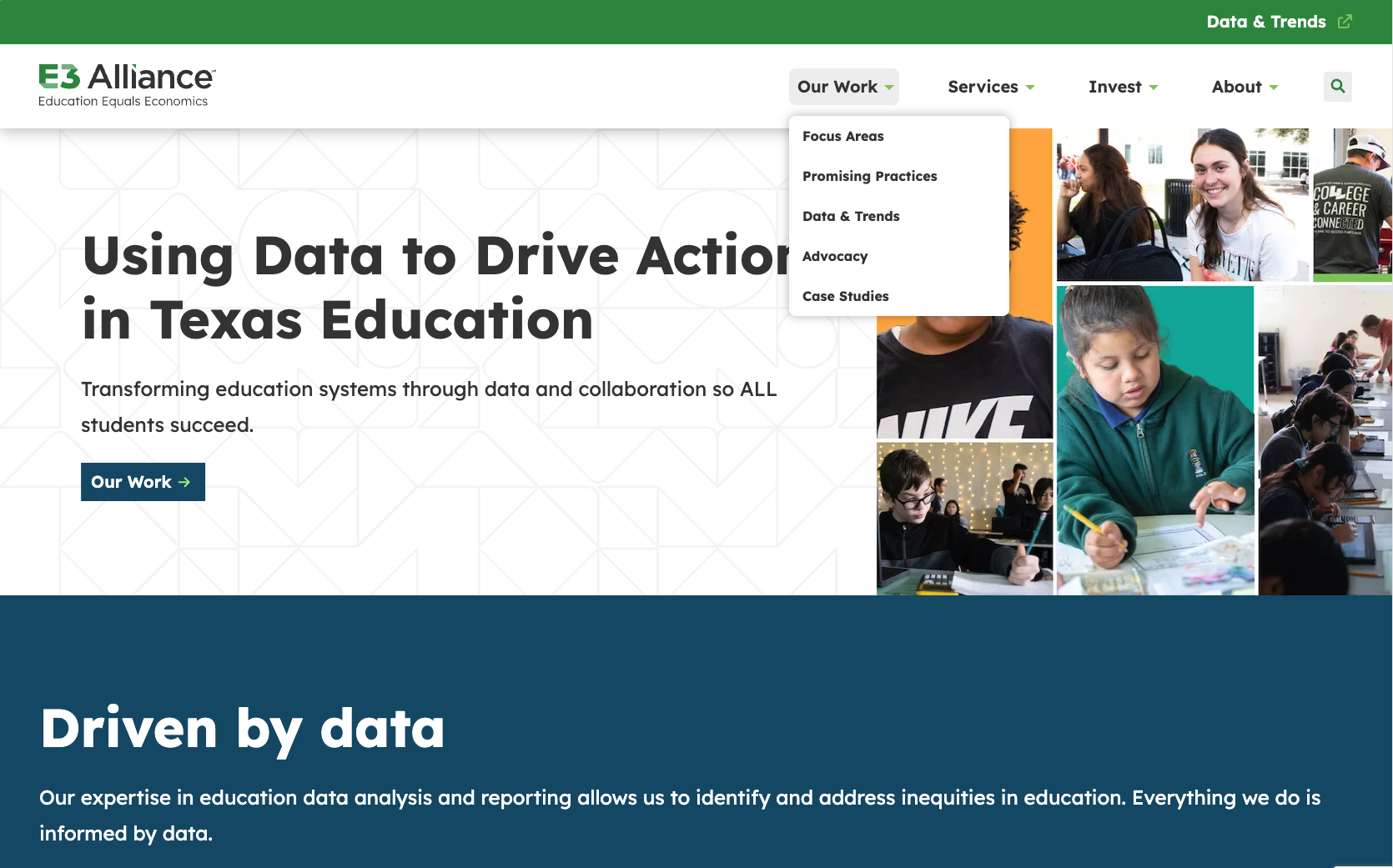
And the impact didn't stop at the website. With clearer language agreed upon internally, the organization also communicated more consistently in partnerships and advocacy work.
What this meant for the organization:
Fewer top-level content categories, making it easier for visitors to find what they needed
A shared internal language that reduced confusion across teams
Stronger, clearer communication about their work—on the site and beyond
A content structure they could build on without starting over
“If you have a complex system or project that needs clarity, vision, and creativity, Allie is your person.”
Kaci Kai
Senior Director of Communications
Education non-profit

Is your organization's website working against you?
If internal complexity is making it hard for your audience to understand what you do, that's a problem worth solving before it gets designed into your next site. I'd love to help you find the clarity.

Curious about the method itself?
Learn why Object-Oriented UX is the foundation behind every project I take on.